Translate

Wednesday, October 30, 2013

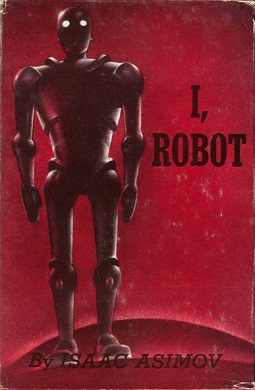
I, Robot by Isaac Asimov (2nd attempt)


The Three Laws of Robotics:

  1. A robot may not injure a human being or, through inaction, allow a human being to come to harm.
  2. A robot must obey the orders given to it by human beings, except where such orders would conflict with the First Law.
  3. A robot must protect its own existence as long as such protection does not conflict with the First or Second Law.
The 3 laws you see above, dominate the book.  Every chapter reinforces the importance of the 3 laws.   Each chapter is like a short story about Robots.  There are certain characters that filter through but for the most part they are stand alone stories.  The first chapter is written like a children's story or a cautionary fairytale.  As you get deeper into the book the stories become more complex and deal with some weighty subject matter.  The final 2 chapters are the most interesting with the argument is man better with or without computers its centre piece.

It is very clear the influence that Isaac Asimov had on Science Fiction.  The amount of books and short stories that Asimov has completed is astounding.  This maybe said a lot but there wouldn't be Science Fiction without Asimov.  This a great read if you have never delved into Science Fiction before and want to get at its heart and soul.


Next book is

Tuesday, September 24, 2013

I, Robot by Isaac Asimov (first attempt)

 
I took out I, Robot from the Brisbane library today.  At least I thought it was I, Robot.  It turns I got out the MacMillan Readers version of it.  This is what is written on the back of the book:
 
This series provides a wide variety of enjoyable reading material for all learners of English.  MacMillan Readers are retold versions of popular classic and contemporary titles as well as specially written stories, published at six levels.  This book is level 4 Pre-intermediate.
 
So I guess I'll be taking this book back and I'll try to get the real version of I, Robot.


Monday, September 23, 2013

What we talk about when we talk about love - Raymon Carver


This book was published in 1981.  One year after the death of Raymond Carver.  This is the first Raymond Carver book that I have read.  It will likely be my last.  This collection of short stories has left me wanting.  Just when the story is going somewhere or is about to go in an interesting direction the writer ends it.  The stories themselves are  at times so mundane that I wonder what is the point?  It could also be that this is way beyond my intellectual level and that while I am just scratching the surface others will get so much more out of these stories.  I hope so.  He is a brilliant writer I just wish there was more meat on this bone.  Also, as I was reading I couldn't help but feel some of these stories felt familiar.  After a little bit of research I found out that some of these stories were used for Robert Altmans movie Short Cuts.  Which is my favorite Robert Altman movie. 

Have you read any Raymond Carver that you would recommend?  Leave a comment here for others to read.

The next book I am reading is:


Sunday, September 15, 2013

A Connecticut Yankee in King Arthur's Court


Its really amusing how life works out.  I had totally planned on reading another book but somehow I started to read A Connecticut Yankee.  Mark Twain is a genius and is funny as hell.  This is one of the first time-travel books ever published and it's great.  The story follows the adventure of a Yankee from Connecticut who mysteriously ends up in England during the middle ages.  This is not a kids book akin to Tom Sawyer or Huckleberry Fin.  It's a book full of political intrigue and grown up thoughts.  Twain was a republican and very much hated the British noble by birth or fealty to a sovereign.  It was released in 1889 but the spirit of 1776 (American Revolution) bleeds through this book.  Here is a great example of his republican spirit:

The country is the real thing, the substantial thing, the eternal thing; it is the thing to watch over, and care for, and be loyal to; institutions are extraneous, they are its mere clothing, and clothing can wear out, become ragged, cease to be comfortable, cease to protect the body from winter, disease, and death. To be loyal to rags, to shout for rags, to worship rags, to die for rags—that is a loyalty of unreason, it is pure animal; it belongs to monarchy, was invented by monarchy; let monarchy keep it....


Another thing I very much enjoyed in this book are Twain's not so veiled cracks at the Catholic church.  He did not like the Church and did not hide from that fact.  Actually the whole book is about debunking the Monarchy.  The main characters goal is to turn Camelot (this perceived moral pinnacle of English life) into America.  If you think that would be a good thing or not I'll leave up to the reader.  It's quite clear that this book has influenced so many other time-travel books.  Many of its themes have been explored by so many other books that a few times I had wondered if I had already read this. 

I really loved this work of fiction.

The next book I am going to read is:


Thursday, August 22, 2013

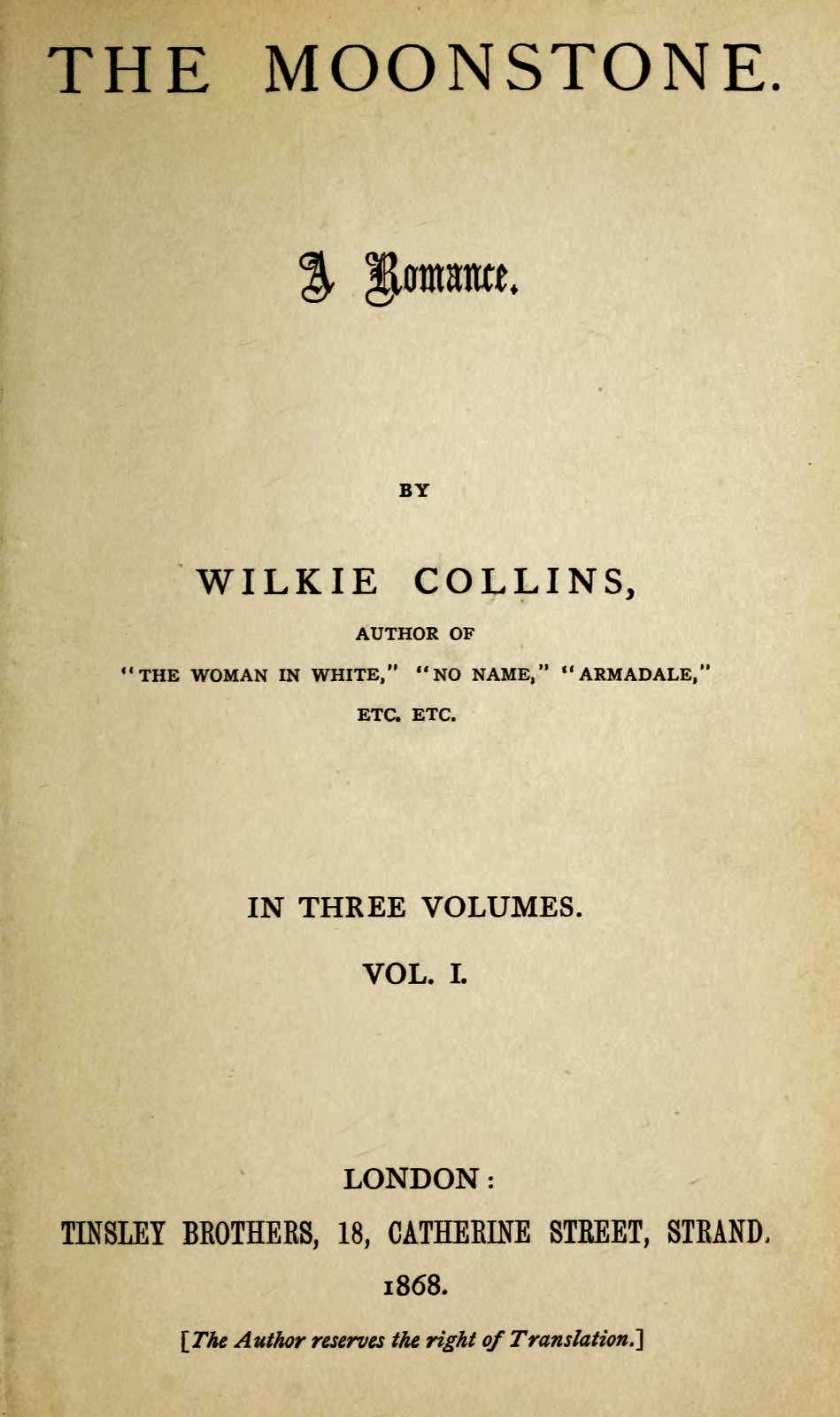
The Moonstone by Wilkie Collins


This is the second book in a row that I read from Wilkie Collins.  The first being the Women in White.  I loved both these books and it really is a shame that I had never heard of Wilkie Collins before.  He is a wonderful writer.  Even though the books are set in the 1850's they do not feel dated at all.  The characters weave in and out of the story beautifully.  The Moonstone is constructed in the same way as the Women in White.  Many characters taking turn at taking over the narrative of the story.  It's a really great way for the author to tell the story in different voices.  For example part of the narrative is written by a Mr. Bruff.  A highly educated lawyer whose narrative is concise and logical and deals with truths.  Another narrative is done by Drusilla Clack.  A poor cousin of the main characters (and a pain in the ass) who believes (as a good Christian woman) that everyone should lead good Christian lives.  Thankfully, she is dismissed and ridiculed by every other character in the novel.

The Moonstone is also considered the first detective novel written in the english language. 

The next book I'm going to read is:

Monday, July 1, 2013

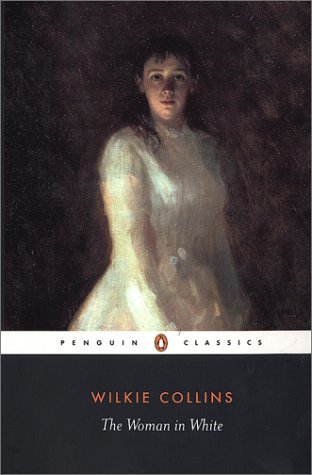
The Woman in White by Wilkie Collins

 
I had never heard of the Woman in White by Wilkie Collins.  Which is a shame.  I really loved reading this book.  Mr Collins has this very simple yet direct way to tell a story.  The story unfolds very slowly but once it gets going its hard to put it down.  The book's narrative is done in many voices.  Major and minor characters take turns to describe versions of the story and its not till about halfway through the book that the main betrayal starts to reveal itself.  The appearance of Count Fosco is a delight.  We don't find out till quite late is he is a hero or a villain. 
 
I was so delighted by this book that I'm going to read the other Wilkie Collins book in the 501 must read books.  The Moonstone.  Which apparently is a great detective story.  Review coming shortly.


Thursday, May 30, 2013

The Voyage of the Beagle by Charles Darwin


I really tried to love this book.  Darwin is a hero of mine.  Origin of the Species is truly one of the great books of all times.  The things that make Origin so great is what (for me) made this book very slow and tedious.  It is the same problem that I had with the Jack London book (Cruise of the snark).  Too much information about very small things.  In Darwin's case he writes page after page about specific birds and how these birds are different then other birds.  For people who like and care about these things then this is the book for you.  I put the book down and picked up a work of fiction instead.

The book I've picked up instead is the Wilkie Collins book The Woman in White.  It's one of those books that after reading 2 paragraphs I knew I would love.  I've read over 100 pages and its a great book.  Review coming soon.